
Is Koba Good For Buying A Flat in Gandhinagar?: A few months ago, I met a family working in Ahmedabad’s IT corridor who were actively searching for a flat in Gandhinagar. They had already visited multiple residential projects in Koba. Every builder claimed the same things:
- “Prices will increase next month.”
- “Only 2 units left.”
- “Metro connectivity will double appreciation.”
- “This is the best investment opportunity.”
The family was confused.
One project looked premium but had weak construction quality. Another had attractive pricing but poor accessibility during peak hours. One builder promised possession in 18 months despite the project barely reaching the basement stage.
This is the real problem with most real estate blogs.
Most articles talk about “luxury lifestyle,” “future growth,” or “smart investment,” but very few explain the risks, compromises, and actual decision-making process buyers face on the ground.
In my experience advising buyers across Gandhinagar micro-markets, Koba is neither a perfect investment destination nor an area buyers should blindly avoid. It has strong infrastructure, improving connectivity, and long-term residential potential — but only for the right type of buyer.
If you choose the wrong project, overpay during hype cycles, or ignore builder credibility, Koba can become an expensive mistake.
This guide is designed to help you avoid that.

Real Buyer Problems in Koba
Price Confusion & Artificial Inflation
One of the biggest problems in Koba’s real estate market is inconsistent pricing.
Two flats in the same township can have price differences of ₹400–₹700 per sq.ft. simply because of:
- Floor rise marketing
- Clubhouse-facing premium
- “Limited-time” offers
- Furnished vs semi-furnished confusion
Many buyers focus only on base price and ignore:
- Maintenance deposits
- Parking charges
- GST
- Legal charges
- Clubhouse fees
- Corpus fund
I’ve personally seen buyers exceed their original budget by ₹8–₹15 lakh because they didn’t calculate the full acquisition cost.
Builder Trust Matters More Than Brochure Quality
Some Koba projects, especially when it comes to Buying Flats in Koba Gandhinagar, may look visually impressive but still have weak execution history.
A polished sales office does not guarantee:
Timely possession
Good construction quality
Legal clarity
Better appreciation
Several buyers make the mistake of prioritizing lifestyle amenities over builder delivery history.
A swimming pool is useless if possession gets delayed by 2 years.
Wrong Location Selection Inside Koba
Not every part of Koba performs equally.
Certain pockets offer:
- Better transit access
- Faster appreciation
- Lower traffic congestion
- Stronger community development
Other pockets suffer from:
- Isolated surroundings
- Weak social infrastructure
- Delayed road expansion
- Low livability for families
Many investors buy based on future promises instead of current usability.
That becomes risky.
End-Use vs Investment Confusion
Koba works differently for:
- Families
- PSU employees
- Long-term investors
- Rental buyers
- Short-term speculators
A family prioritizing stability and lifestyle should not follow the same strategy as an investor chasing ROI.
This confusion leads buyers toward the wrong configuration, wrong budget, and wrong holding period.

Step-by-Step Buyer Action Plan
Step 1: Location Selection
What To Do
Study:
- Office commute routes
- Accessibility to Ahmedabad
- School proximity
- Future infrastructure development
- Daily convenience requirements
Why It Matters
A flat’s value depends heavily on neighborhood quality and transit convenience.
Even within Koba:
- Some sectors feel connected and premium
- Others still feel underdeveloped
Mistakes To Avoid
- Buying only because “metro is coming”
- Choosing isolated projects for lower pricing
- Ignoring peak-hour traffic conditions
Pro Tip
Visit the area:
- Early morning
- Evening rush hour
- Weekend night
This reveals real livability conditions.
Step 2: Budget & Price Validation
What To Do
Compare:
- Registry transaction values
- Circle rates
- Nearby resale prices
- Actual carpet area pricing
Why It Matters
Builders often market “launch prices” that are not truly discounted.
Real estate value depends on:
- Demand
- Accessibility
- Infrastructure growth
- Builder trust
—not marketing banners.
Mistakes To Avoid
- Taking pre-launch pricing at face value
- Ignoring maintenance burden
- Stretching EMI capacity dangerously
Pro Tip
Keep EMI below 35–40% of monthly household income.
That protects long-term financial stability.
Step 3: Builder & RERA Verification
What To Do
Verify:
- RERA registration
- Previous delivery history
- Litigation records
- Construction progress
- Occupancy certificate status
Why It Matters
A good location cannot compensate for a weak builder.
Mistakes To Avoid
- Trusting verbal promises
- Ignoring delayed projects by the same developer
- Assuming all RERA-approved projects are equally safe
RERA improves transparency — but does not eliminate execution risk.
Pro Tip
Visit completed projects by the same builder and talk to existing residents.
Step 4: Site Visit Checklist
What To Do
Check:
- Construction quality
- Ventilation
- Waterlogging risk
- Sunlight exposure
- Parking movement
- Elevator quality
- Common area finishing
Why It Matters
Show flats hide many real-world issues.
Mistakes To Avoid
- Buying without physical inspection
- Ignoring surrounding developments
- Not checking drainage or road conditions during monsoon
Pro Tip
Stand quietly in the balcony for 5 minutes.
Noise levels tell you more than brochures ever will.
Step 5: Legal & Registry Checks
What To Do
Verify:
- Title clarity
- NA permission
- Approved layout plan
- Encumbrance status
- Loan approvals from reputed banks
Why It Matters
Legal mistakes become expensive later during resale or financing.
Mistakes To Avoid
- Depending only on builder legal teams
- Skipping independent legal review
Pro Tip
Spend on a property lawyer before spending crores on a flat.
Step 6: Negotiation Strategy
What To Do
Negotiate:
- Floor rise
- Parking charges
- Clubhouse fees
- Payment schedules
- Interior packages
Why It Matters
Many buyers unknowingly pay inflated premiums.
Mistakes To Avoid
- Negotiating only on headline price
- Showing emotional attachment too early
Pro Tip
Month-end and quarter-end periods often provide better negotiation opportunities.
Read More:- RERA Approved Projects In Koba Gandhinagar
Real Case Studies
Case Study 1 — End-User Family
- Buyer Type: PSU Employee Family
- Budget: ₹82 lakh
- Location: Central Koba
- Configuration: 3 BHK
- Purchase Year: 2022
- Purchase Price: ₹74 lakh all-inclusive
- Current Estimated Value: ₹88–₹92 lakh
What Worked
- Chose a ready-to-move project
- Prioritized accessibility over luxury amenities
- Verified builder history carefully
Lesson Learned
The buyer avoided under-construction risk and gained stability plus moderate appreciatio
Case Study 2 — Investor
- Investor Type: NRI Buyer
- Entry Price: ₹58 lakh
- Rental Yield: ~2.9%
- Holding Period: 4 years
- Current Estimated Value: ₹71 lakh
What Worked
- Bought near developing transit infrastructure
- Selected a project with lower density
- Focused on long-term growth instead of quick flipping
What Didn’t
Rental demand was slower initially than expected.
Exit Strategy
Hold until infrastructure expansion improves demand further.
Social Proof
Parth IT Professional — Bought in Koba
“I initially planned to buy in Ahmedabad, but Koba gave me better value and less congestion. The biggest help was comparing actual registry pricing instead of builder claims.”
JAY Retired PSU Officer
“We avoided one project after checking previous delivery delays by the same builder. That decision probably saved us years of stress.”
jofra NRI Investor
“Koba worked for long-term appreciation, but not for quick profits. Buyers expecting instant ROI may feel disappointed.”
Credibility, Verified Data & Market Context
This analysis is based on:
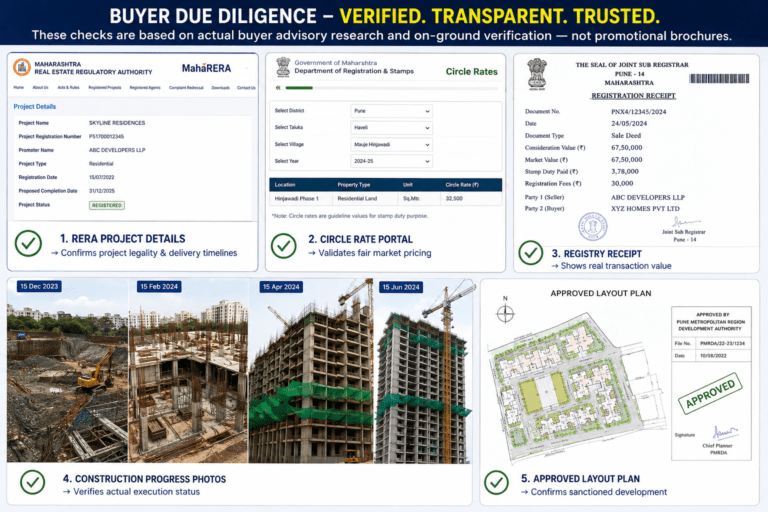
- RERA verification
- Registry transaction reviews
- Circle rate comparisons
- Site visits
- Local market observation
- Buyer advisory interactions
Current market observations:
- Demand in Koba remains stable
- Appreciation is steady, not explosive
- Premium pricing exists in select projects
- Buyers are becoming more cautious about builder reputation
- Interest rate sensitivity has reduced speculative buying
This is healthier than hype-driven markets.
Proofs & Screenshot
Who This Guide Is NOT For
This guide is NOT for:
- Short-term flippers
- Buyers expecting instant appreciation
- Speculative investors chasing rumors
- Buyers with unstable income
- People stretching finances aggressively
You should reconsider buying if:
- Your job location may change soon
- You cannot comfortably manage EMI pressure
- You are buying only because others are buying
Koba is better suited for:
- Long-term residential stability
- Moderate appreciation expectations
- End-users valuing accessibility and infrastructure growth
This guide will NOT help with:
- Insider investment tips
- Quick-profit strategies
- Unrealistic ROI expectations
If I Were Buying This Property Today
I would buy — but selectively.
I would prioritize:
- Ready or near-ready projects
- Proven builders
- Strong accessibility
- Lower-density communities
- Functional layouts over luxury marketing
I would avoid:
- Overpriced launch-phase projects
- Builders with delivery issues
- Flats sold mainly through hype
I would negotiate hardest on:
- Parking
- Floor-rise premiums
- Payment schedules
- Possession-linked commitments
One red flag I would never ignore:
A builder avoiding transparent answers about previous project delays.
That usually signals deeper problems.
Conclusion
So, is Koba good for buying a flat in Gandhinagar?
For the right buyer — yes.
Koba offers:
- Strong connectivity
- Improving infrastructure
- Better livability than many crowded urban pockets
- Long-term residential stability
- Moderate appreciation potential
But success depends less on the area itself and more on:
- Project selection
- Builder credibility
- Budget discipline
- Verification process
A good location cannot protect buyers from bad decisions.
If you approach Koba carefully, validate pricing honestly, and focus on long-term usability rather than hype, it can become a practical and financially stable residential choice.
If you still have doubts, create a comparison checklist before booking anything. That single step prevents many expensive emotional decisions.