
Why Infrastructure Matters Before Buying Property: A few years ago, I advised a family that was excited about buying a new apartment in a rapidly developing area. The property looked attractive, the builder offered a discount, and the project promised modern amenities. The family was ready to book immediately.
Before they made the payment, I asked them to spend a weekend visiting the area at different times of the day.
The experience changed their decision completely.
They discovered severe traffic congestion during peak hours, limited public transportation, poor road connectivity, and a lack of nearby healthcare facilities. Although the apartment itself was impressive, the surrounding infrastructure was not ready to support comfortable daily living.
This situation is more common than many buyers realize.
Most people focus on the property, but successful real estate decisions require evaluating the entire ecosystem around it. Infrastructure influences everything from convenience and livability to property appreciation, rental demand, resale value, and long-term investment returns.
If there is one lesson I have learned from years of observing residential property markets, it is this:
A good property in a poor location rarely becomes a great investment, but an average property in a well-developed location often performs exceptionally well over time.
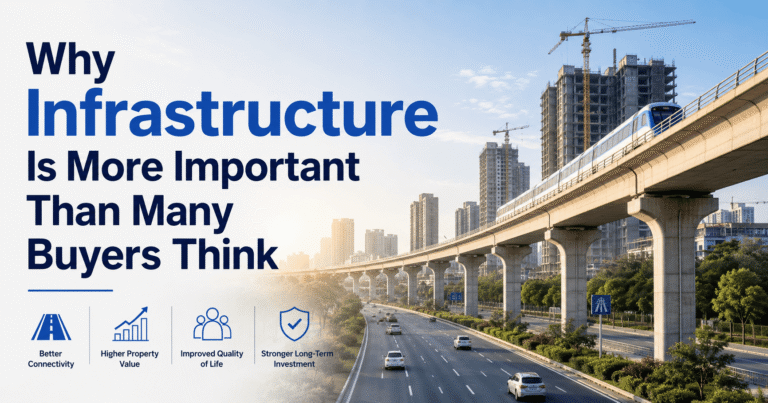
Why Infrastructure Is More Important Than Many Buyers Think
When buyers hear the word infrastructure, they often think only about roads and highways.
In reality, infrastructure includes a much broader network of facilities and services that support daily life and economic activity.
These include:
- Road connectivity
- Highways and transit corridors
- Public transportation and metro networks
- Water supply
- Electricity infrastructure
- Drainage and sewerage systems
- Broadband and internet connectivity
- Healthcare facilities
- Schools and educational institutions
- Retail and commercial centers
- Community amenities
- Public services and security infrastructure
All these factors influence how people live, work, travel, and invest in a neighborhood.
Without strong infrastructure, even the most attractive residential project can struggle to maintain demand and long-term value.
How Infrastructure Directly Impacts Property Value
One of the biggest misconceptions in real estate is that property prices rise simply because time passes.
In reality, appreciation usually follows infrastructure development.
When governments invest in transportation networks, highways, metro systems, commercial districts, and public utilities, accessibility improves. As accessibility improves, businesses move in. Employment opportunities increase. Population growth follows.
This creates demand for housing.
Higher demand often leads to stronger property valuation and better resale opportunities.
I have seen locations remain stagnant for years because infrastructure projects were delayed. I have also seen areas transform dramatically after the completion of a major road, metro corridor, or commercial hub.
The property itself did not change.
The surrounding infrastructure did.
Connectivity Can Influence Your Daily Life More Than the Property
Many buyers fall in love with a project’s clubhouse, landscaped gardens, or premium finishes.
These features are valuable, but they cannot compensate for poor connectivity.
A beautiful apartment becomes far less attractive when residents spend two hours every day in traffic.
Before purchasing property, evaluate:
- Distance from major employment centers
- Highway connectivity
- Access to public transportation
- Metro accessibility
- Commute times during peak hours
- Future transportation projects
A location with excellent mobility often delivers better livability and stronger demand from future buyers and tenants.
Connectivity is not just a convenience issue.
It is a long-term financial factor.
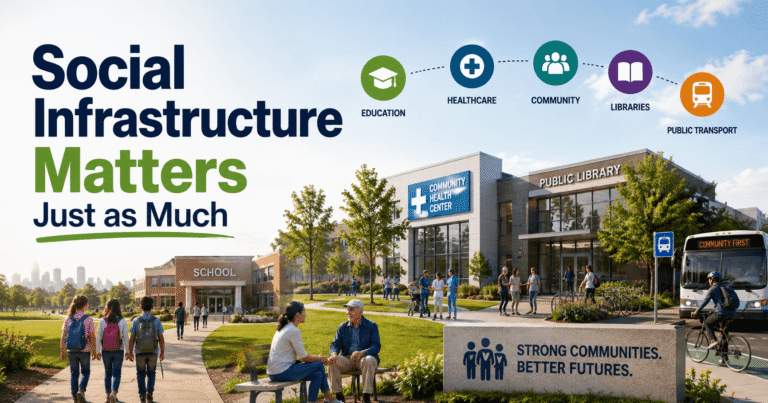
Social Infrastructure Matters Just as Much
Physical infrastructure attracts attention, but social infrastructure often determines quality of life.
Social infrastructure includes:
- Schools
- Colleges
- Hospitals
- Healthcare facilities
- Retail centers
- Markets
- Community facilities
- Recreational amenities
Families frequently underestimate how important these services become after moving in.
A property may seem affordable initially, but if residents must travel long distances for education, healthcare, shopping, and daily necessities, the hidden cost of inconvenience becomes significant.
Whenever I evaluate a neighborhood, I ask a simple question:
“Can residents comfortably meet most daily needs within a short distance?”
If the answer is no, buyers should proceed cautiously.
Utilities Are Often Ignored Until Problems Appear
Few buyers ask detailed questions about utilities.
Unfortunately, utility-related issues can significantly impact livability.
Key infrastructure elements include:
Water Supply
A property’s long-term livability depends heavily on a reliable water supply. Buyers should evaluate the source of water, storage capacity, and the area’s ability to meet future demand. Frequent shortages can increase living costs and reduce overall convenience. Verifying water infrastructure before purchase helps avoid future problems.
Electricity Infrastructure
Consistent electricity availability is essential for comfortable modern living. Frequent power outages can disrupt daily activities, remote work, and the use of household appliances. Strong electrical infrastructure also contributes to higher property desirability and resident satisfaction. Buyers should assess the area’s power reliability before making a decision.
Drainage and Sewerage Systems
Consistent electricity availability is essential for comfortable modern living. Frequent power outages can disrupt daily activities, remote work, and the use of household appliances. Strong electrical infrastructure also contributes to higher property desirability and resident satisfaction, making it one of the important factors to consider before buying property. Buyers should assess the area’s power reliability before making a decision.
Broadband and Internet Connectivity
Reliable broadband and internet connectivity have become essential for work, education, entertainment, and communication. Poor internet infrastructure can affect productivity and limit access to digital services. Properties located in well-connected areas are often more attractive to both residents and tenants. Buyers should check network availability and service quality before purchasing.
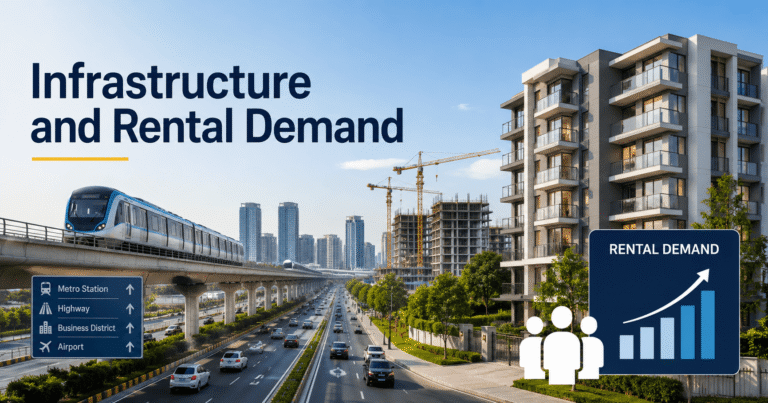
Infrastructure and Rental Demand
Investors frequently focus on purchase price while ignoring rental market fundamentals.
Tenants prioritize convenience.
Properties located near transportation hubs, employment centers, educational institutions, healthcare facilities, and commercial areas generally experience stronger rental demand.
Tenants often choose accessibility over luxury.
A moderately priced apartment with excellent connectivity can outperform a premium property located in an isolated area.
When evaluating rental potential, consider:
- Commute convenience
- Public transportation access
- Employment growth
- Nearby schools and hospitals
- Retail availability
Strong infrastructure often supports long-term tenancy and stable rental income.
Future Development Matters More Than Current Development
Smart buyers do not evaluate only today’s infrastructure.
They also analyze future development plans.
Important factors include:
- Proposed highways
- Metro expansions
- Commercial districts
- Industrial corridors
- Smart-city initiatives
- Urbanization plans
- Government infrastructure projects
Future-ready locations often experience stronger appreciation because infrastructure-led growth attracts both residents and businesses.
However, buyers should verify official planning documents rather than relying on marketing claims.
Promises do not increase property value.
Actual development does.
Common Infrastructure Mistakes Buyers Make
Mistake #1: Buying Based Only on Price
A lower property price can be appealing, but affordability alone should not drive the decision. Properties in areas with weak infrastructure often experience slower appreciation and lower demand over time. Buyers should evaluate connectivity, amenities, and future development before focusing solely on cost. A cheaper property today may become a costly compromise later.
Mistake #2: Ignoring Daily Commute
Many buyers underestimate the impact of long commute times on their daily routine. Poor connectivity can increase travel stress, reduce productivity, and affect overall quality of life. Visiting the location during peak traffic hours can provide a realistic picture of accessibility. Convenience should be considered alongside property features.
Mistake #3: Trusting Future Promises Blindly
Developers often highlight upcoming infrastructure projects to attract buyers, but not all projects are completed as planned. Delays, funding issues, and policy changes can affect project timelines significantly. Buyers should verify development plans through official sources rather than relying solely on marketing claims. Investing based on confirmed infrastructure is usually a safer approach.
Mistake #4: Overlooking Utility Infrastructure
Essential services such as water supply, electricity, drainage, and sewerage directly influence everyday living. Many buyers focus on the property itself while ignoring these critical systems. Poor utility infrastructure can lead to ongoing inconvenience and unexpected expenses. Evaluating these basics is just as important as assessing the apartment’s design and amenities.
Mistake #5: Ignoring Neighborhood Development
A property’s future value is closely connected to the growth of the surrounding neighborhood. Commercial activity, social infrastructure, employment opportunities, and community development all contribute to long-term demand. Buyers should assess both current conditions and future growth potential. A well-developing neighborhood often supports stronger appreciation and resale value.
A Realistic Example
Consider two similar apartments priced at ₹70 lakh.
Property A
- Weak road connectivity
- Limited public transportation
- Few schools nearby
- Minimal commercial activity
Property B
- Strong highway access
- Metro connectivity planned
- Established schools and hospitals
- Growing retail and business presence
Many buyers choose Property A because it offers a slightly larger unit.
However, over a 10-year period, Property B often generates stronger appreciation, better rental demand, and easier resale opportunities.
The difference is infrastructure.
Not construction quality.
Not floor plans.
Infrastructure.
How to Evaluate Infrastructure Before Buying Property
Use this simple checklist before making a purchase decision:
Transportation
- Road connectivity
- Highway accessibility
- Public transportation
- Metro access
- Commute analysis
Utilities
- Water supply
- Electricity reliability
- Drainage systems
- Sewerage infrastructure
- Broadband connectivity
Social Infrastructure
- Schools
- Colleges
- Hospitals
- Healthcare facilities
- Retail centers
- Community amenities
Future Growth
- Urbanization plans
- Infrastructure projects
- Commercial development
- Employment growth
- Smart-city initiatives
The more boxes a location checks, the stronger its long-term prospects.
If I Were Buying Property Today
If I were buying property today, infrastructure would be one of my top three decision-making factors.
I would prioritize:
- Strong connectivity
- Reliable utilities
- Established social infrastructure
- Future transportation projects
- Sustainable urban development
I would be cautious about locations where appreciation depends entirely on future promises rather than visible development.
The red flag I would never ignore is poor accessibility.
In my experience, infrastructure problems are much harder to solve than property-specific issues.
You can renovate an apartment.
You cannot easily fix an entire neighborhood.
Conclusion
Infrastructure is the foundation upon which successful real estate investments are built.
Roads, highways, transportation networks, utilities, healthcare facilities, educational institutions, commercial centers, and community services all contribute to a property’s long-term value and livability.
Many buyers focus exclusively on the property itself while overlooking the ecosystem that surrounds it. This often leads to frustration, lower appreciation, weaker rental demand, and reduced resale potential.
Before purchasing any property, take the time to evaluate connectivity, accessibility, infrastructure development, utilities, neighborhood growth, and future planning initiatives.
The goal is not simply to buy a home.
The goal is to buy into a location that can support your lifestyle, protect your investment, and create long-term value.
The best property decisions are rarely driven by brochures or discounts.
They are driven by understanding how infrastructure shapes the future of a location.