
A few months ago, a young IT couple walked into my office in Kudasan looking completely confused.
They had shortlisted a 3 BHK in Gandhinagar, liked the flat, liked the builder—and yet something didn’t feel right.
“Sir, everyone says this is the best price, but we feel we’re overpaying.”
That’s the real problem with buying property in Gandhinagar.
Most buyers don’t lose money because prices are high — they lose money because they don’t know how to negotiate property price in Gandhinagar correctly.
Most blogs tell you generic things like “negotiate hard” or “compare prices”.
On ground, those tips don’t work.
In this guide, I’ll share exactly how real buyers negotiate, what works with local builders, what actually brings the price down, and where buyers silently lose ₹5–15 lakh without realizing it.

PROBLEM EXPLANATION: Why Buyers Struggle to Negotiate in Gandhinagar
Price Confusion
Most buyers struggle to understand the real cost of a flat due to misleading base prices. Parking, GST, maintenance deposits, and floor rise charges often surface later. Comparing under-construction and ready-to-move prices adds more confusion. Without checking circle rates and recent registry data, buyers may overpay. Transparent price breakup is essential before committing.
Builder Trust Issues
Not all builders deliver what they promise in brochures. Delayed possession, layout changes, and poor construction quality are common concerns. Buyers often rely on brand names instead of checking past delivery records. RERA approval helps, but site visits and local feedback matter more. Trust should be built on execution history, not marketing.
Location Mistakes
A flat may look affordable today but suffer due to poor connectivity or limited development. Many buyers choose locations far from daily needs like schools, offices, and markets. Upcoming infrastructure is often exaggerated by sales teams. Without rental demand or resale value, the location becomes a long-term mistake. Practical livability should always come first.
Living vs Investment Confusion
Buyers often mix emotional living needs with investment expectations. A good home for self-use may not always give high rental returns. Similarly, high-growth investment areas may lack comfort for daily living. Without clarity, compromises hurt both goals. Deciding the purpose first helps select the right property type and location.

STEP-BY-STEP SOLUTION: Actionable Buyer Guide
Step 1: Location Selection (Before Negotiation Starts)
Shortlist 1–2 micro-locations only (e.g., Kudasan vs Sargasan — not both randomly).
Each locality has different pricing, builder quality, and future growth patterns. Comparing Kudasan and Sargasan together often leads to confusion and wrong decisions. Deeply understanding one area helps you judge fair prices and project quality better. Focused shortlisting also improves negotiation power and faster decision-making.
Why it matters:
Negotiation power depends on demand vs supply in that exact pocket.
Mistakes to avoid:
- Comparing circle rates of different sectors
- Assuming cheaper area = better deal
Pro tip from experience:
In high-demand pockets like Kudasan, negotiate on terms & add-ons, not headline price. In developing pockets like Raysan, negotiate price directly.
Step 2: Budget & Price Validation
What to do:
Recent Registry Values
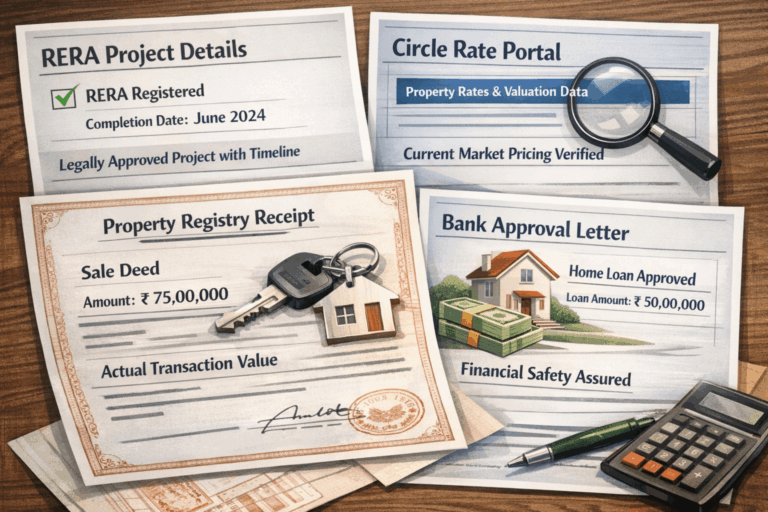
Recent registry values are the actual sale prices at which similar flats were registered with the sub-registrar. These reflect real market transactions, not advertised rates. Checking these helps you understand what buyers actually paid in the locality. They’re vital for negotiation and avoiding overpricing. Always compare registry values of similar configurations (2BHK vs 3BHK).
Circle Rate Portal
The circle rate portal shows the government’s official minimum property value for stamp duty and registration. It’s a baseline below which transactions are often flagged or valued higher by authorities. Circle rates differ by micro-location, floor, and usage (residential vs commercial). Knowing them helps avoid hidden costs and claim fair valuations during sale/purchase.
Nearby Project Transactions
Nearby project transactions refer to recent sales in projects around your chosen location. These help you see real price trends, absorption speed, and what buyers are willing to pay nearby. They’re more reliable than brochure prices from a single builder. Use them to benchmark offers and validate your seller’s quotes.
Why it matters:
You can’t negotiate without a defensible reference price.
Mistakes to avoid:
- Trusting online portal prices blindly
- Comparing under-construction with ready-to-move
Pro tip:
I’ve helped buyers reduce ₹6–10 lakh just by showing registry data of the same building.
Step 3: Builder & RERA Verification
What to do:
RERA Registration Number
The RERA registration number confirms that the project is legally approved and monitored by the authority. It allows buyers to verify project details like layout, carpet area, timelines, and approvals. Always cross-check the number on the official RERA portal. If a project avoids sharing it, treat it as a red flag. RERA protects buyers against false promises.
Delivery History
Delivery history shows whether the builder actually hands over projects on time. Past delays often repeat, regardless of current promises. Check completed projects, not just ongoing ones. Speak to existing residents about handover quality and after-sales service. A strong delivery record matters more than discounts.
Ongoing Litigation (If Any)
Litigation includes legal disputes related to land title, approvals, or buyer complaints. Even a good project can get stuck due to unresolved cases. Buyers should check court records, RERA complaints, and local feedback. Ongoing litigation can delay possession and loan approvals. Clear legal status equals peace of mind.
Why it matters:
Strong builders negotiate less on price but more on payment flexibility.
Mistakes to avoid:
- Negotiating first, verifying later
- Ignoring RERA timelines
Pro tip:
If the project is nearing OC, builders are more flexible — cash flow matters to them.
Step 4: Site Visit Checklist (Negotiation Happens Here)
What to do:
Actual Flat View
Always check the actual flat view, not just the sample unit or brochure images. Look at open spaces, road distance, and facing buildings. A poor view can affect ventilation, privacy, and resale value. Floor height alone doesn’t guarantee a good view. What you see on-site is what you live with long term.
Ventilation
Good ventilation keeps the flat cool, reduces dampness, and improves daily comfort. Check for cross-ventilation through opposite windows or balconies. Avoid flats where rooms depend entirely on artificial light. Poor ventilation leads to higher electricity bills and long-term maintenance issues. Spend time inside the flat before deciding.
Parking Clarity
Parking confusion is common in many projects. Confirm whether parking is allotted, covered, and legally mentioned in the agreement. Check the actual parking layout on-site, not just verbal promises. Also review visitor parking availability. Lack of clarity can create daily conflicts later.
Why it matters:
Every drawback = negotiation leverage.
Mistakes to avoid:
- Visiting only sample flat
- Ignoring floor-specific disadvantages
Pro tip:
Corner flats, podium-facing units, or lower floors often carry hidden negotiation scope.
Step 5: Legal & Registry Checks
What to do:
Title Clarity
Title clarity ensures the property has a clear and legal ownership history. It confirms there are no disputes, loans, or third-party claims on the flat or land. Buyers should verify the title chain through legal documents and approvals. Any uncertainty can delay registration or future resale. Clear title is the foundation of a safe purchase.
Previous Registry Values
Previous registry values show the actual prices at which the property or nearby units were officially registered. They reflect real market transactions, not advertised rates. Checking these values helps buyers judge fair pricing and spot overvaluation. Sudden price spikes should be questioned. Registry data strengthens negotiation power.
Agreement Clauses
Agreement clauses define possession timelines, payment schedules, penalties, and exit options. Many buyers overlook fine print related to delays or changes in specifications. Clauses on cancellation, maintenance charges, and defect liability are especially important. Unbalanced clauses can weaken buyer rights. A legal review before signing is always advisable.
Why it matters:
Clean legal projects give confidence — and confidence improves negotiation tone.
Mistakes to avoid:
- Ignoring stamp duty valuation
- Not checking past sale deeds
Pro tip:
Mention registry value politely during negotiation — it signals seriousness.
Step 6: Actual Negotiation Tips That Work in Gandhinagar
What works:
Asking for Net Effective Price, Not Discounts
Builders often highlight discounts to distract from the real cost. Always ask for the final net payable amount including all charges. This avoids confusion caused by inflated base prices and artificial offers. Net effective price helps you compare projects fairly. It also reveals how flexible the builder truly is.
Negotiating Parking, Stamp Duty, GST, Floor Rise
Instead of chasing price cuts, negotiate on add-on costs. Parking charges, floor rise, stamp duty support, and GST absorption are easier for builders to adjust. These savings directly reduce your outflow. Many buyers miss this opportunity by focusing only on per sq ft rates. Smart negotiation happens in the breakup.
What doesn’t work:
- Threatening to walk away unrealistically
- Comparing with fake online prices
Pro tip from experience:
The strongest sentence is:
“We are ready, but the numbers must make sense as per market data.”
Read More: Check Before Booking a Flat in Gandhinagar – Complete Legal, RERA & Price Verification Guide

REAL EXAMPLES, DATA & CASE STUDIES
Case Study 1: End-User Family (Sargasan)
- Quoted price: ₹78 lakh (3 BHK)
- Final negotiated price: ₹71.5 lakh
- Strategy used: Registry comparison, Floor disadvantage leverage
- Result: Saved ₹6.5 lakh, Ready-to-move, zero rental risk
Lesson:
End-users should negotiate certainty, not just discounts.
Case Study 2: Investor (Kudasan)
- Purchase price (2022): ₹62 lakh
- Rental yield: ₹22,000/month
- Current value (2026): ₹82–85 lakh
- Negotiation tactic: Early booking, Bulk inventory discussion
Lesson:
Investors win by timing, not emotional bargaining.

TESTIMONIALS (SOCIAL PROOF)
“Registry data helped us negotiate ₹6 lakh less without any argument.”
— Amit Patel, Business Owner, Raysan
“We ignored a famous builder and chose value instead. Best decision.”
— Neha Shah, IT Professional, Kudasan
“Clear negotiation saved us from overpaying for amenities we didn’t need.”
—Anita Patel First-time Buyers, Sargasan

VERIFIED FACTS, DATA & CREDIBILITY SIGNALS
Gujarat RERA Portal for Project Verification
The Gujarat RERA portal is the first checkpoint to verify any real estate project. It provides official details like RERA registration number, approved plans, carpet area, and possession timelines. Buyers can also see the promoter’s past projects and complaints filed. Always match brochure claims with RERA data. If details don’t align, reconsider the deal.
Circle Rate Data from State Government Portal
Circle rate data shows the government-defined minimum property value for registration purposes. It helps buyers understand whether a quoted price is inflated or reasonable. Circle rates vary by area, property type, and usage. Knowing this data avoids stamp duty surprises later. It’s a strong benchmark for price validation.
Local Registry Office Transaction Records
Registry office records reflect actual sale transactions, not advertised prices. These records show what buyers recently paid in the same area or project. They are extremely useful for negotiation and market reality checks. Comparing multiple transactions gives a true price range. This data cuts through sales hype.
Gandhinagar AUDA Development Plans
AUDA development plans reveal future roads, zoning, infrastructure, and growth corridors. These plans help buyers judge long-term livability and appreciation potential. Many “upcoming advantages” claimed by builders are already visible here—or not. Checking AUDA plans prevents location-based mistakes. Smart buyers always look at future development, not just current price.
PROOFS & SCREENSHOT PLACEMENTS
CONCLUSION
Negotiating property prices in Gandhinagar is not about being aggressive.
It’s about being prepared, informed, and calm.
From my on-ground experience, buyers who:
- Validate data
- Understand micro-markets
- Negotiate with clarity
👉 Always get the better deal.
Reach out or drop a comment below — I personally review real buyer cases.